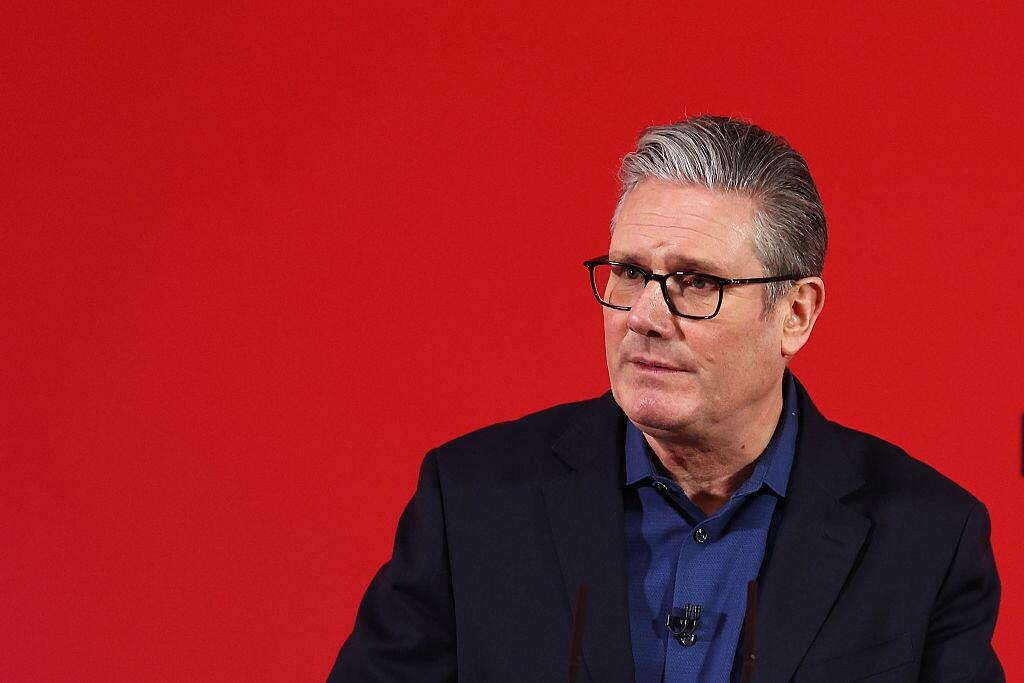
Tuesday, 10 February 2026 — London British Prime Minister Sir Keir Starmer stood firm today amid one of the gravest political crises of his premiership, rejecting mounting calls from within his own party to resign and asserting that he would remain in Downing Street to see through his government’s agenda.
In a series of dramatic developments over the past week, Starmer has been confronted with internal dissent sparked by the controversial appointment of Lord Peter Mandelson as the United Kingdom’s ambassador to the United States. Critics have seized on Mandelson’s well‑documented past links to the late financier Jeffrey Epstein, prompting fierce debate about judgement, governance and accountability at the highest levels of government.
Starmer addressed Labour Party lawmakers and his Downing Street staff on Monday, telling them that politics “must remain a force for good” as he sought to reassure colleagues and supporters that he was committed to continuing in office. The prime minister stressed that his focus was on delivering the mandate given to Labour by voters in the 2024 general election and on uniting the party behind its broader mission of national reform.
The backbench revolt intensified after two of Starmer’s most senior aides resigned in quick succession. Morgan McSweeney, the prime minister’s chief of staff, was the first to step down amid the fallout over Mandelson’s appointment. On Monday, Tim Allan, Downing Street communications director, confirmed he was also quitting to “allow a fresh team to support the government through this period.”
Starmer’s defiant stance has drawn mixed reactions. Deputy Prime Minister David Lammy and Housing Secretary Steve Reed publicly backed Starmer, urging party unity and arguing that his leadership offered the best chance to enact long‑term change. Reed emphasised that Starmer had successfully steered Labour to office and must be afforded a full opportunity to implement the party’s agenda, asserting that “now is not the time for division.”
However, Scottish Labour leader Anas Sarwar became the most senior figure within the party to explicitly call for Starmer’s resignation, describing the situation as a failure of judgement that undermined public trust. Sarwar’s intervention has amplified pressure on the prime minister, triggering debate in Westminster and across the media about whether Starmer can withstand sustained internal criticism.
At a meeting of the Parliamentary Labour Party, Starmer acknowledged mistakes in communication and internal coherence but insisted that he had “won every fight I’ve been in” and would not abandon his responsibilities. He urged MPs to focus on policy achievements and governance, rather than what he described as “distractions” from Labour’s core mission.
Political analysts say the crisis has exposed lingering tensions between the party’s progressive base and its leadership, raising questions about Starmer’s strategic direction and ability to maintain cohesion among lawmakers. There is speculation that a challenge to his leadership could emerge if dissent continues to grow, though no formal challenge has yet been launched.
Outside Westminster, the controversy has shifted public attention as election cycles approach in several local councils and devolved governments later this year. Pollsters suggest growing unease among some voters, with recent surveys indicating a slight dip in Labour’s overall approval ratings.
For now, Starmer has weathered immediate calls to resign, bolstered by senior ministers’ backing and by his own insistence that he remains best placed to lead the government. Yet the crisis is far from over, with political commentators warning that internal instability could have long‑lasting impacts on the party’s cohesion and prospects.
The coming days are expected to see further exchanges within the Labour Party and in Parliament, with Starmer and his cabinet seeking to refocus attention on domestic policy challenges, including economic targets, public services reform and environmental policy.