LONDON, 26 January 2026 — Former Home Secretary Suella Braverman formally quit the Conservative Party on Monday and joined the populist Reform UK, in a high‑profile political shift that has sent ripples through Westminster and heightened focus on the future of Britain’s traditional political order.
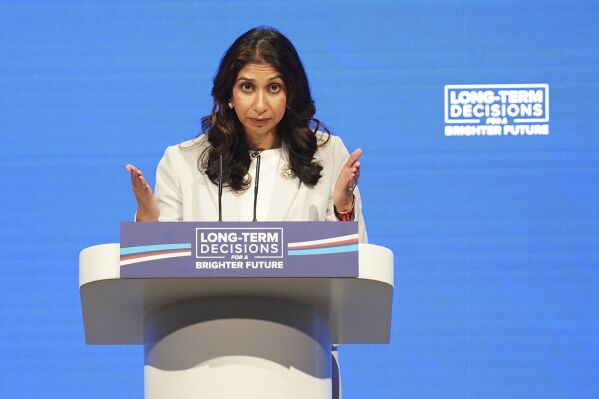
Braverman, the Member of Parliament for Fareham and Waterlooville, announced her departure from the Conservatives at a rally in central London hosted by Reform UK leader Nigel Farage. She accused her former party of failing to deliver on key promises, particularly on immigration policy, and said her decision was driven by a belief that Reform UK offered a more credible path to remedy what she described as a “broken” nation.
“This is a moment of truth for British politics,” Braverman said in her address, speaking to a crowd that included veterans and party supporters. “I feel like I have come home. For too long our voices have been sidelined, and for too long this country has been dragged down by managed decline. Today, I choose hope and change.”
Her move to Reform UK marks another blow to the Conservative Party, already grappling with internal divisions and waning public support. Braverman is the latest among a small but increasingly symbolic group of former Conservative figures now lining up behind Reform UK. Earlier this month, former shadow justice secretary Robert Jenrick also defected, and Braverman’s addition brings the total number of Reform UK MPs in the House of Commons to eight.
Reform UK — led by Farage, a controversial and outspoken figure in British politics — has surged in some opinion polls ahead of both the Conservatives and Labour, buoyed by pledges to tighten immigration controls and challenge what it calls the political establishment. Analysts say Braverman’s high profile and track record on national security and immigration policy boost the party’s visibility and could intensify pressure on the Conservative leadership.
In her speech, Braverman singled out her disagreement with her former party over its handling of the European Convention on Human Rights (ECHR) — a long‑standing point of contention in British politics. She argued Britain must fully withdraw from the ECHR to exert greater control over migration and asylum processing, an objective that Reform UK has pledged to pursue if it gains power.
“The Conservatives promised decisive action but delivered half‑measures. The British public deserves better,” she told reporters after the rally. “I am proud to join a movement that stands unwaveringly for British sovereignty, security, and prosperity.”
Conservative Party leader Kemi Badenoch responded to Braverman’s defection with a statement urging unity amid a challenging political landscape. “We regret Suella Braverman’s decision to leave the Conservative Party,” the statement read. “Yet our focus remains on delivering the policies that matter for working families and renewing this great party for the future.”
Badenoch has previously sought to stem defections by warning MPs against what she called “psychodrama and intrigue,” emphasizing that internal cohesion was vital ahead of upcoming local elections.
Labour Party figures also weighed in on the development. Labour sources described the defection as “a symptom of a broader Conservative collapse,” saying it underscored the need for clarity on the centre‑ground political agenda. Labour, currently holding a commanding majority in the Commons, has focused its messaging on public services, cost‑of‑living issues, and economic stability.
Political commentators say Braverman’s defection illustrates deepening fault lines in British politics. While Reform UK’s parliamentary numbers remain small, its growing public profile and presence in opinion polls suggest the party could play a disruptive role in the lead‑up to the next general election — due by 2029 at the latest.
For now, Braverman insists her decision reflects conviction rather than opportunism. “Today we turn the page on an old chapter,” she said. “We now write a new story for Britain.”