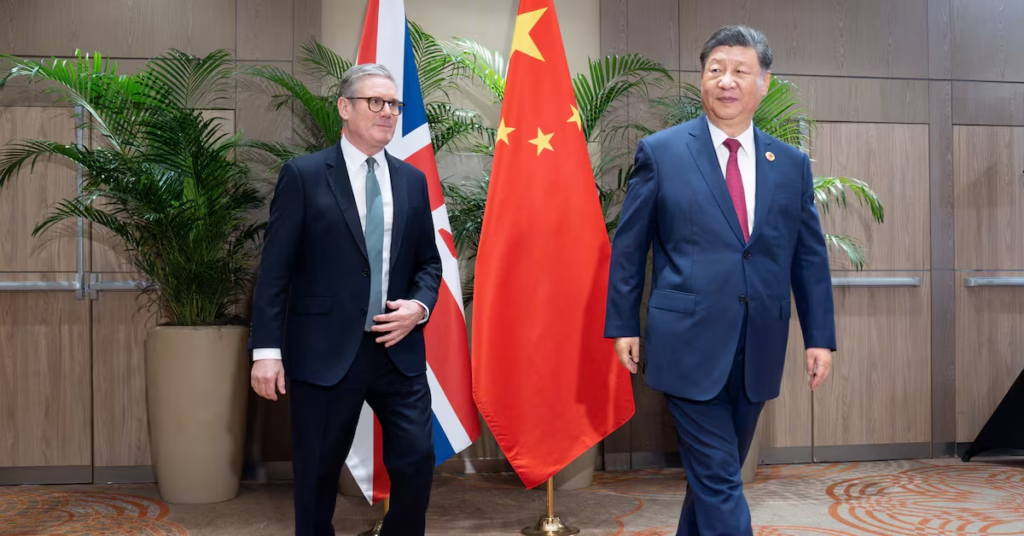
Beijing, Jan 27, 2026 UK Prime Minister Sir Keir Starmer arrived in Beijing on Tuesday, launching a high-stakes diplomatic visit aimed at repairing strained relations between Britain and China while carefully navigating pressure from key Western allies, particularly the United States.
The visit marks the first time in nearly a decade that a sitting British prime minister has traveled to China, signaling a notable shift in London’s foreign policy posture following years of diplomatic frost, trade disputes, and human rights concerns.
Downing Street said Starmer’s trip is focused on “pragmatic engagement,” with discussions expected to center on trade, climate cooperation, global security, and economic stability. Officials stressed that the UK is seeking a balanced approach — engaging with Beijing where interests align while continuing to raise concerns over issues such as market access, cybersecurity, and global governance.
Starmer is scheduled to meet senior Chinese leaders, including President Xi Jinping and Premier Li Qiang, as well as business executives and climate officials. The meetings are expected to lay the groundwork for renewed economic dialogue, particularly in green technology, advanced manufacturing, and financial services.
The visit comes at a sensitive time in global politics, with tensions between China and the United States remaining high. Washington has recently warned allies against deepening economic reliance on Beijing, urging closer coordination on supply chains, technology controls, and security cooperation.
UK officials insist that the China visit does not represent a shift away from Britain’s longstanding alliances. Instead, they frame it as a move toward “strategic realism” in an increasingly fragmented world.
“Britain cannot afford isolation in a multipolar global economy,” a senior government official said. “Engagement does not mean endorsement. It means protecting UK interests while maintaining open channels of communication.”
Business leaders have welcomed the visit, arguing that prolonged diplomatic distance has hurt British exporters and investors. China remains one of the UK’s largest trading partners outside Europe, though bilateral trade has stagnated in recent years amid political uncertainty and regulatory barriers.
Human rights groups, however, have urged the prime minister to take a firm stance during talks, particularly on issues involving Hong Kong, Xinjiang, and press freedom. Several protests were held in London ahead of the trip, with activists calling for transparency around any economic agreements reached.
Starmer acknowledged these concerns before departing the UK, stating that “British values will not be sidelined,” but he also emphasized the need for dialogue rather than disengagement.
Foreign policy analysts say the visit reflects a broader recalibration of UK diplomacy following domestic political changes and evolving global power dynamics. With Europe focused on regional security and the US increasingly consumed by domestic politics, Britain is seeking to carve out a more independent international role.
Whether the trip leads to tangible policy outcomes remains uncertain. Any agreements announced are expected to be limited in scope, with officials stressing incremental progress rather than sweeping breakthroughs.
Still, the symbolism of the visit is significant. It signals an end to diplomatic inertia and a recognition that the UK must actively engage with major global powers to remain economically and politically relevant.