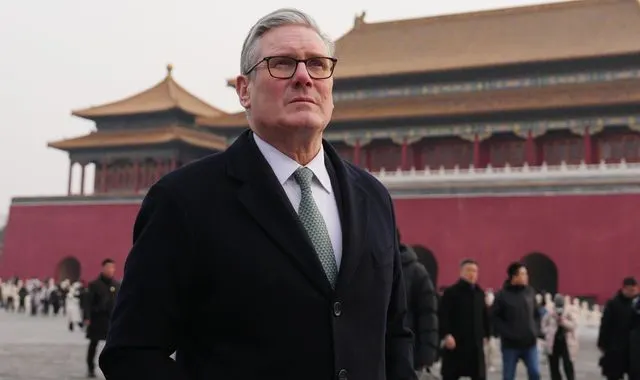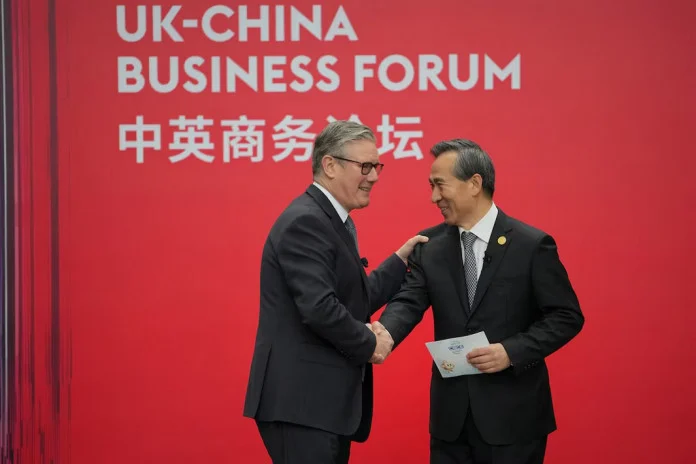
BEIJING, Jan 30, 2026 — Prime Minister Keir Starmer concluded high-level meetings in Beijing on Friday, emphasizing trade expansion and economic cooperation while navigating complex geopolitical sensitivities surrounding China’s global influence.
The visit, his first official trip to China since taking office, focused on strengthening commercial ties and securing greater access for British firms in key sectors including green energy, financial services, life sciences, and advanced manufacturing.
Speaking after talks with Premier Li Qiang, Starmer said the UK must “engage pragmatically in a competitive global economy” while protecting national security interests. “Our objective is clear — to secure growth, create jobs, and ensure British businesses can compete internationally,” he said.
Officials accompanying the delegation described discussions as “constructive and forward-looking.” Several memoranda of understanding were signed, outlining cooperation in renewable energy development and research partnerships between universities.
Trade experts say the trip reflects the government’s strategy to pursue economic diplomacy without compromising on strategic caution. Britain has maintained scrutiny over critical infrastructure investments and technology transfers, even as it seeks broader commercial engagement.
Back home, political reaction has been mixed. Supporters argue the visit demonstrates economic realism, particularly as global markets remain uncertain. Critics, however, questioned whether closer engagement might dilute Britain’s stance on issues such as cybersecurity and human rights.
Diplomatic analysts note that the trip comes at a sensitive moment in international relations, with Western governments reassessing their China policies. The UK appears to be pursuing what officials describe as a “balanced approach” — cooperating where interests align, challenging where necessary.
Business leaders largely welcomed the visit. Representatives from major British firms joined the delegation, attending trade forums in Shanghai and Beijing. Many expressed optimism that smoother regulatory pathways could unlock billions in potential exports over the coming years.
Economic data released this week underscores the importance of overseas growth opportunities. With domestic housing activity slowing and consumer spending moderating, external trade is increasingly viewed as a pillar of economic stability.
Observers say the success of the visit will ultimately depend on follow-through — translating diplomatic goodwill into measurable investment and export gains.
As the Prime Minister departed Beijing, officials stressed that engagement with China forms only one part of a broader global strategy that includes strengthening ties with the United States, the European Union, and Indo-Pacific partners.
For now, the visit signals Britain’s intent to remain an active economic player on the world stage, even as geopolitical tensions shape the contours of global trade.