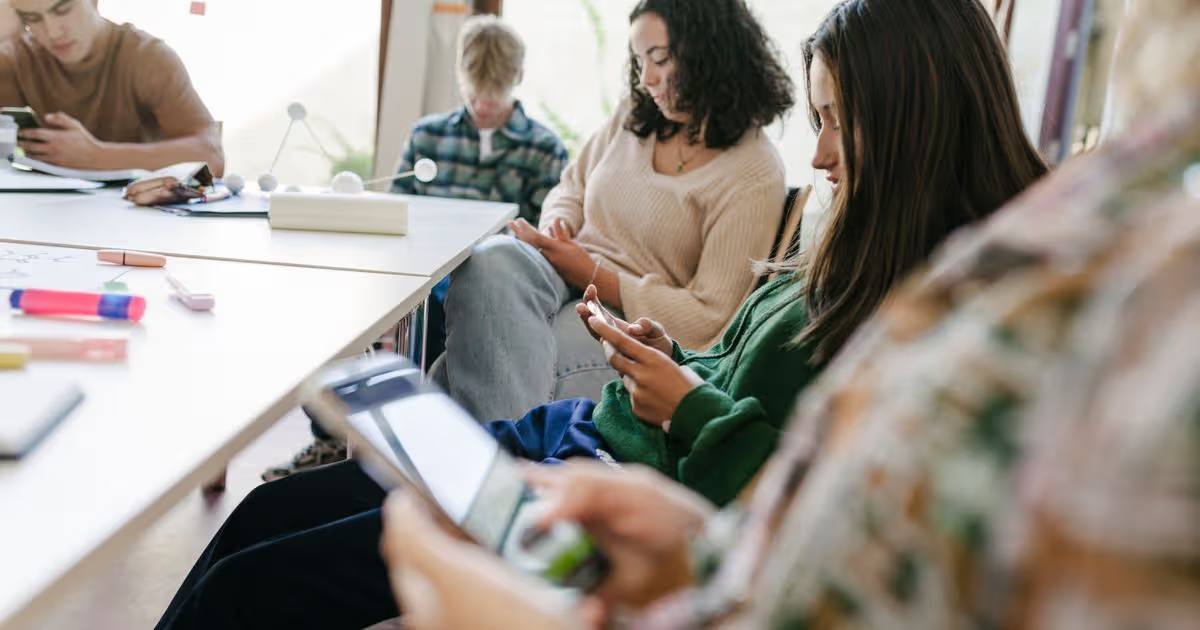
LONDON, Feb. 5, 2026 — The House of Lords has thrown its support behind stricter rules limiting mobile phone use in schools, intensifying a national debate over children’s wellbeing, digital distraction and online safety.
Peers voted in favor of measures encouraging schools in England to implement comprehensive bans on pupil phone use during the school day. The proposal forms part of a broader push to address concerns about social media exposure, mental health and classroom discipline.
Advocates argue that smartphones have become a major source of distraction, undermining concentration and academic performance. They also point to mounting evidence linking excessive screen time to anxiety, sleep disruption and cyberbullying.
“Children deserve an environment that supports learning and healthy development,” said one peer during the debate. “Schools must be places where attention is focused on education, not notifications.”
The move aligns with guidance already issued by the Department for Education, which has encouraged headteachers to restrict phone use. While many schools have adopted their own policies, approaches vary widely, ranging from partial bans to complete prohibition.
Teachers’ unions have largely welcomed clearer direction. Some educators say enforcement can be challenging without consistent national standards. “When rules differ from one school to another, it creates confusion for families and students,” said a secondary school headteacher in Birmingham.
Parents are divided. Supporters of a ban say it will help children build healthier habits and improve social interaction. Critics argue that phones provide a sense of security, particularly for students commuting long distances or managing after-school responsibilities.
Youth advocacy groups have urged policymakers to involve young people in the conversation. They caution that outright bans may not address the underlying issues of digital literacy and responsible use. “Education about technology is just as important as restriction,” said a spokesperson for a child welfare charity.
The debate extends beyond school gates. Some lawmakers have proposed tighter regulations on social media platforms, including age verification measures and limits on targeted advertising to minors. Others have called for collaboration with tech companies to design safer digital environments.
Internationally, several countries have introduced similar policies in recent years. Supporters say early evidence suggests improvements in classroom focus and peer relationships.
The government has indicated that final decisions will rest with individual schools but signaled strong backing for robust policies. Education Secretary statements emphasized the importance of empowering teachers to maintain discipline and prioritize learning.
Opposition voices have warned against overreach, arguing that flexibility is essential to accommodate different school contexts. They stress that any guidance must consider the needs of students with medical conditions or special educational requirements.
As the policy moves forward, schools are expected to review their existing rules and consult with parents and staff. Implementation details — including storage solutions, disciplinary procedures and exceptions — will likely shape the practical impact.
For many families, the conversation reflects a broader reckoning with technology’s role in daily life. The House of Lords vote signals a growing consensus among lawmakers that the balance between connectivity and wellbeing requires careful recalibration.