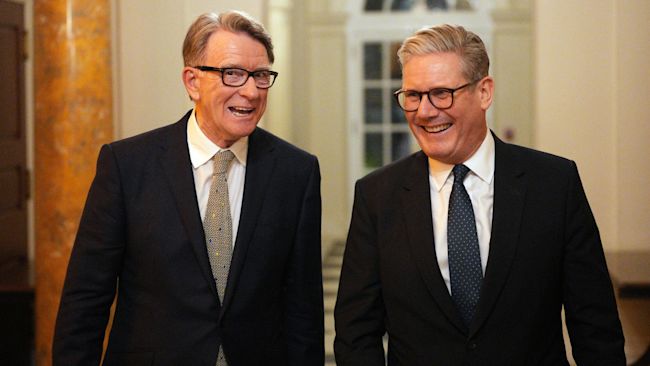
Tuesday, February 3, 2026 — London A fresh political storm swept through Westminster on Tuesday as calls intensified for Lord Peter Mandelson to relinquish his peerage following renewed scrutiny over his historical associations with disgraced financier Jeffrey Epstein.
The controversy erupted after newly surfaced documents in the United States reignited questions about Mandelson’s past contact with Epstein more than a decade ago. While the former Labour cabinet minister has denied any wrongdoing, political pressure has mounted across party lines, with critics arguing that the matter risks undermining public trust in Britain’s political institutions.
Prime Minister Sir Keir Starmer stopped short of demanding immediate removal but confirmed that the Cabinet Office had initiated an internal review into the circumstances surrounding the former minister’s connections. “Public confidence in our democratic system must remain paramount,” Starmer said during a brief statement outside Downing Street. “We will ensure that the facts are carefully examined.”
The issue has revived a long-running debate over the mechanisms for stripping life peers of their titles. Under current rules, removal from the House of Lords is rare and typically reserved for cases involving criminal convictions or serious misconduct findings. Constitutional experts say reform may be required if Parliament wishes to broaden the grounds for expulsion.
Opposition figures seized on the controversy, accusing the government of reacting too slowly. A senior Conservative MP described the matter as “a serious test of accountability,” arguing that public office holders must meet the highest ethical standards, even in matters dating back years.
Lord Mandelson, who previously served as Business Secretary and held key roles during the New Labour era, issued a statement late Monday insisting he had “no recollection of any improper dealings” and welcomed a formal review. “I have always acted within the rules and in good faith,” the statement read.
Beyond the immediate political fallout, analysts say the row may have broader implications for Labour’s reform agenda. The government has pledged to restore standards in public life following years of turbulence in British politics. Any perception of inconsistency, political commentators warn, could weaken that message.
Meanwhile, campaigners for transparency in public life have renewed calls for a comprehensive ethics overhaul, including clearer guidelines on post-ministerial relationships and foreign contacts. “The public deserves clarity,” said one governance expert. “Whether wrongdoing occurred or not, ambiguity fuels distrust.”
As Parliament resumes debate this week, attention is expected to focus not only on the individual case but also on structural reforms. For many MPs, the controversy represents more than a personal matter — it has become a broader referendum on accountability in Britain’s unelected upper chamber.